Blog
-
 CEO Desk
-
Kochi
-
Date : 13/07/2026
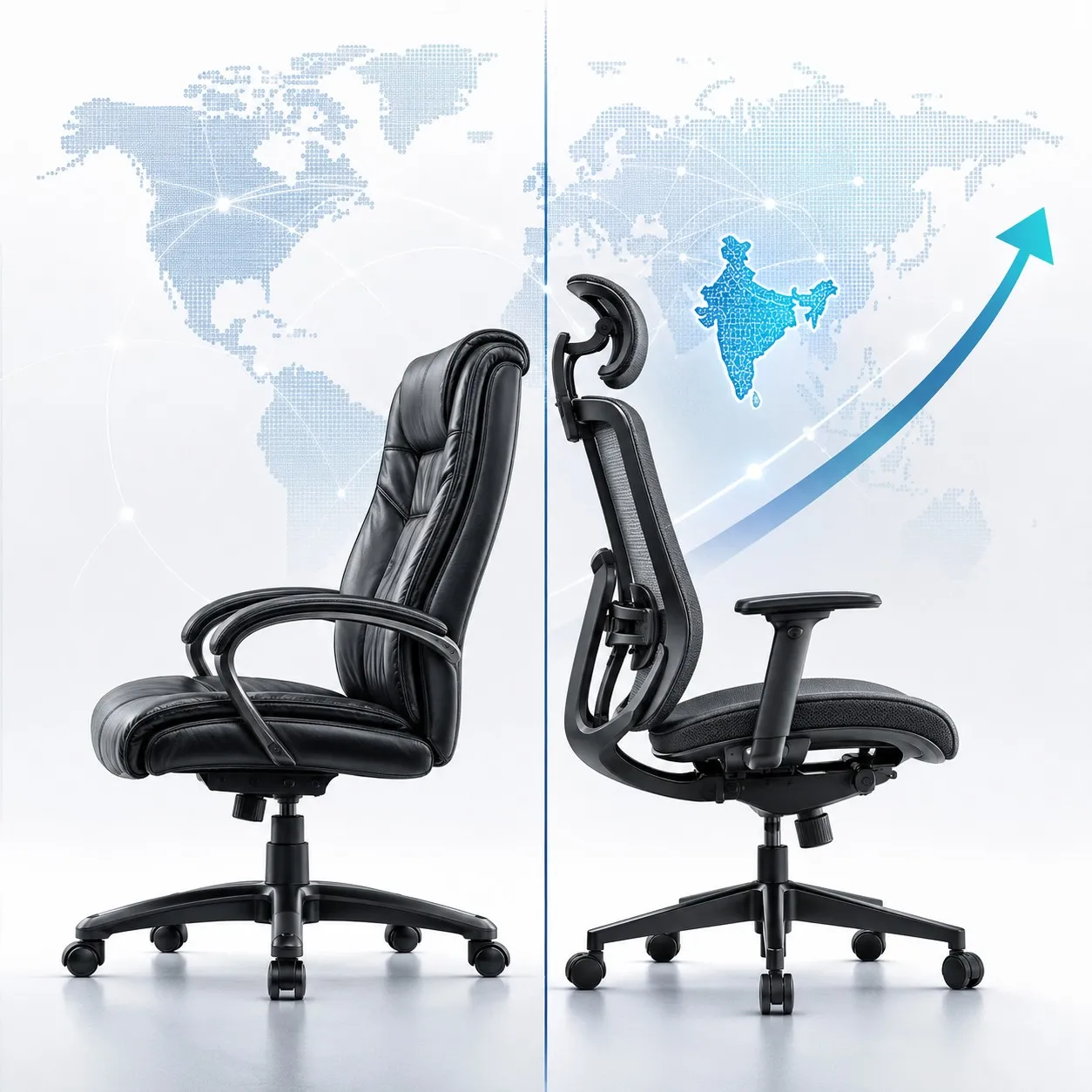
For most of the last century, the office chair was an afterthought four legs, a cushion, and a backrest bought in bulk and replaced only when it broke. That is no longer the case. Seating has quietly become the most scrutinised, most engineered, and most contested category in commercial furniture, and the numbers back this up. Industry estimates now put the global ergonomic chair market above USD 13 billion for 2026, with steady annual growth projected through the next decade. Within the broader office furniture industry, chairs alone are estimated to account for roughly a third of total category spend the single largest line item on most procurement sheets. The reason is simple: employers have finally connected the dots between how people sit and how well they work.
As a manufacturer that has spent 20+ years supplying seating and modular furniture into corporate India, we think it's worth taking an honest look at where this global shift is heading, and just as importantly how much of it genuinely translates to Indian offices today.
Ergonomics has moved from niche to non-negotiable
A decade ago, "ergonomic" was a premium label reserved for boardrooms and CXO cabins. That framing has broken down. Surveys across corporate workplaces now report that a majority of office employees experience some form of posture-related discomfort during a normal working week, and organisations have responded by treating adjustability seat height, lumbar depth, armrest travel, recline tension as a baseline specification rather than an upgrade. More than half of new chair launches globally now ship with tunable lumbar support as standard, not optional.
This is not purely a wellness story. Employers are increasingly framing ergonomic seating as a productivity and attrition tool: fewer sick days, fewer musculoskeletal complaints, better retention. Corporate wellness budgets have absorbed furniture procurement in a way that would have seemed unusual even five years ago, with some estimates suggesting large enterprises now allocate a third or more of their furniture budget specifically toward ergonomic categories.
Modularity is winning over fixed layouts
The second major shift is structural rather than physical. Open-plan cubicles and fixed executive layouts are giving ground to activity-based working desks, storage, and seating systems designed to be reconfigured as teams and projects change shape. Modular seating and workstation clusters that can be rearranged without an electrician or a carpenter are now a standard request from facilities teams, not a bespoke one. Global manufacturers report strong growth specifically in modular systems, workstation pods, and shared clusters, driven by hybrid work patterns that have made the "one desk per person, forever" model obsolete.
For a manufacturer, this changes what we're actually selling. It's no longer a chair or a desk in isolation — it's a system that has to talk to the next system, five or ten years down the line, without the client needing to replace an entire floor.
Materials, sustainability, and the slow greening of the factory floor
Sustainability has moved from a marketing slide to a procurement filter. Buyers, particularly multinational tenants and government tenders are now asking pointed questions about recycled content, end-of-life recyclability, and certification. Globally, demand for sustainable and recyclable ergonomic designs is being cited as one of the largest incremental growth opportunities in the category over the next few years. Mesh-based seating, valued for airflow and lighter material footprint, has grown particularly quickly, with adoption rising sharply as buyers move away from dense foam-and-leatherette construction.
In India specifically, this trend runs into a practical constraint: certified sustainable raw material and recycled polymer supply chains are still thin compared to Europe or North America, and cost-sensitive buyers don't always reward the green premium the way Western tenants do. It's a real trend, but its Indian adoption curve is a few years behind the global one.
Smart seating: real, but overstated for now
No trends article would be complete without mentioning sensor-embedded, posture-correcting, app-connected seating. It is a genuine and growing niche global reports suggest close to a third of premium ergonomic chairs sold this year will carry some form of digital adjustability or sensor feature, but it remains concentrated in flagship offices of large technology firms and a handful of premium residential buyers. For the vast majority of Indian corporate procurement, this is closer to a talking point than a line item, and we'd caution any manufacturer against over-investing here before the base market has even finished adopting basic ergonomic adjustability.
What this looks like on the ground in India
India is, by most industry estimates, one of the fastest-growing regional markets for ergonomic and modular furniture, with the domestic office furniture market pegged in the range of USD 5 billion for 2026 and forecast to keep growing at a high single-digit to low double-digit annual rate through the early 2030s. Seating consistently shows up as the largest single product segment in Indian market studies — usually estimated at 40% or more of total category share ahead of desks, storage, and tables.
Three forces are driving this locally:
First, real estate. India added a substantial pipeline of new office space through 2025 and into 2026, and every new floor that gets built needs to be furnished from scratch which is a very different demand driver from the West's replacement-cycle market.
Second, government policy. Make in India, the Smart Cities Mission, and the broader push toward domestic manufacturing have made local production of office furniture including compliance with Bureau of Indian Standards specifications - a genuine commercial advantage rather than a compliance checkbox. Buyers, especially government and PSU tenders, increasingly prefer domestically manufactured, BIS-compliant seating over imports.
Third, the hybrid work hangover. Indian offices adopted hybrid work later and less completely than their Western counterparts, but the effect on furniture demand is now visible — more shared desking, more focus booths, more furniture designed to be moved rather than bolted down.
Where India genuinely lags is on the sustainability and smart-furniture fronts, largely for cost reasons rather than lack of interest. Raw material volatility - MS, Foam, Polyurethene, Particleboard has squeezed margins across the domestic industry for the past few years, and that makes it harder for manufacturers to absorb the added cost of recycled inputs or embedded sensors without passing it on to price-sensitive buyers. The market is moving in the right direction, but adoption here will likely track global trends with a three-to-five-year lag rather than moving in lockstep.
Our view
We don't think every global trend needs to be imported wholesale into an Indian price list. Ergonomic adjustability and modularity are no longer optional the data, and frankly our own order books, confirm that Indian buyers now expect both as standard. Sustainable materials and digital seating are real trends worth building toward, but for most Indian corporate and institutional buyers today, the honest priority order is: get the ergonomics right, get the modularity right, and bring sustainability and smart features in as the market and the supply chain catches up.
That's the balance we're building toward at Trisun: seating engineered to global ergonomic standards, manufactured for Indian conditions and price points, and modular enough to grow with a client's office rather than needing to be replaced by it.

Four decades of tracking input costs in this industry teaches you to distrust any sentence...
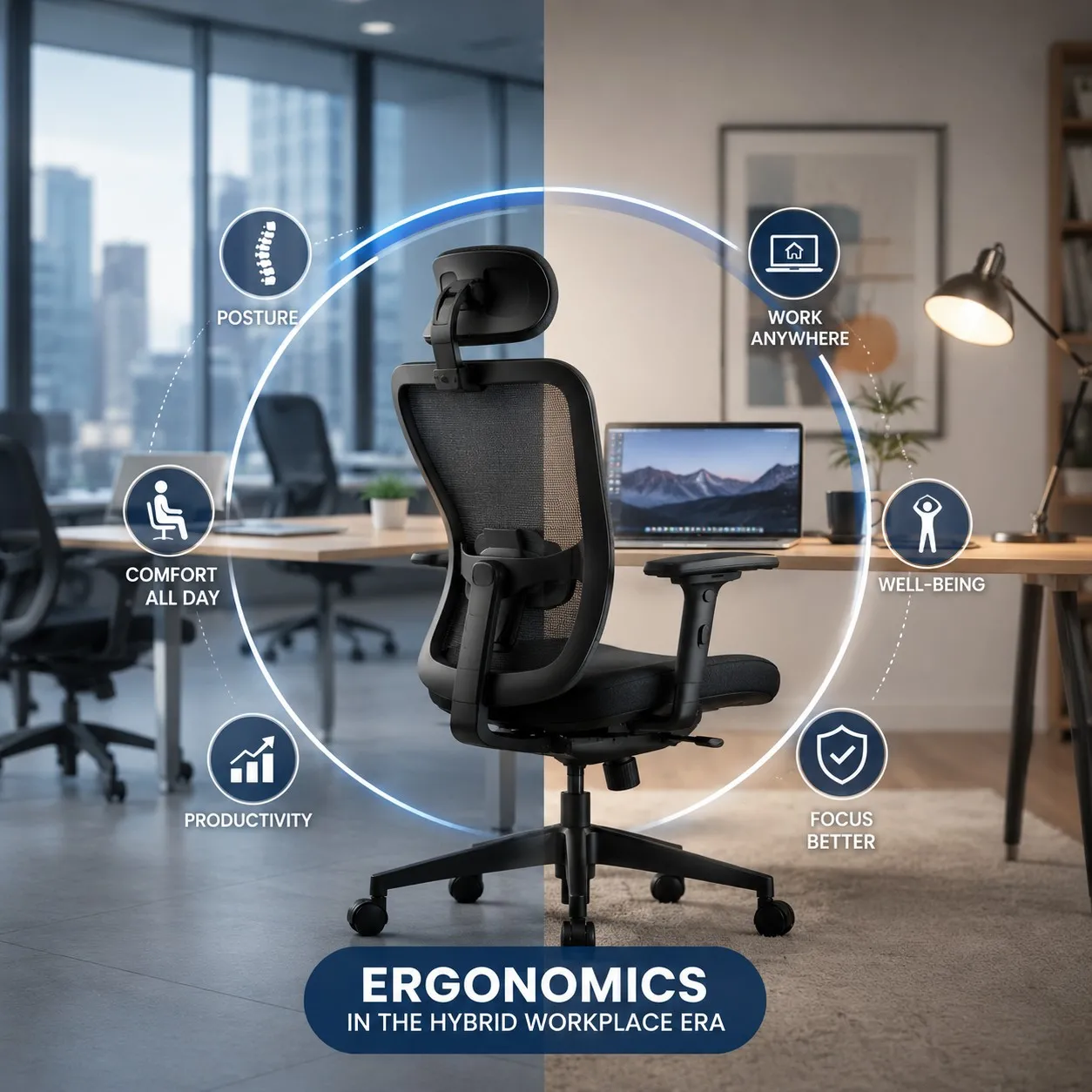
Hybrid work has changed how offices are used on a daily basis. Employees no longer stay fi...